Build an Oral-Health Routine That Puts the Fundamentals First
Build a practical oral-health routine around brushing, interdental cleaning, diet, hydration and dental care, and see where Dentolyn may fit as an optional supplement.
This page may earn a commission from qualifying purchases. This does not change the price you pay or our evidence standards.
What Should a Practical Oral-Health Routine Include?
The strongest routine starts with repeated daily behaviors rather than a single product. The supplied review emphasizes the role of daily dental-care practices in maintaining oral hygiene and supporting a favorable oral environment.
Morning
Brush thoroughly, clean the tongue where appropriate and begin hydrated.
During the day
Manage food and drink exposures, maintain hydration and notice recurring symptoms.
Evening
Brush, clean between teeth and pay attention to plaque accumulation before sleep.
Compare Dentolyn Only After the Basics Are in Place
Use any oral-health supplement as an optional layer around established daily care, not as a substitute for brushing, interdental cleaning or dental treatment.
Why Daily Consistency Matters
Oral health is shaped by repeated exposures. Food, plaque, brushing quality, hydration and other habits act day after day. A supplement cannot physically clean tooth surfaces or interdental spaces, so routine quality remains the primary variable a user can control.
Foundational, Supportive and Optional Layers
| Layer | Examples | Role |
|---|---|---|
| Foundational | Brushing, interdental cleaning, dental care | Core hygiene and assessment |
| Supportive | Diet awareness, hydration, smoking avoidance | Helps shape the oral environment |
| Optional | Oral-health supplements | Possible complementary layer |
Where Dentolyn May Fit
Dentolyn can be evaluated as an optional daily oral-health supplement for users who already maintain the basic routine. The currently reviewed formula lists xylitol, vitamin C, vitamin B6, iodine, chlorella powder, clinoptilolite zeolite powder and magnesium stearate.
What the Formula Does and Does Not Tell You
A label tells you what a product contains. It does not by itself establish that the finished product prevents cavities, treats gum disease, corrects dysbiosis or produces a specific fresh-breath outcome.
Routine-Fit Checklist
| Question | Why it matters |
|---|---|
| Are brushing and interdental cleaning consistent? | Supplements cannot replace mechanical cleaning. |
| Is diet working against the routine? | Repeated sugar exposure can affect the oral environment. |
| Are symptoms persistent? | Persistent problems may need assessment rather than product switching. |
| Is the formula transparent? | Product comparison starts with actual ingredients. |
| Is evidence ingredient-level or product-level? | This prevents overclaiming. |
When a Supplement Is a Stronger or Weaker Fit
Potentially stronger fit: someone who already maintains good oral hygiene, wants a simple optional supplement and understands the evidence limitations.
Weaker fit: someone expecting a substitute for brushing, a treatment for disease or a solution for persistent unexplained symptoms.
Useful Next Steps
When Routine Questions Become Dental Questions
Persistent pain, bleeding, swelling, loose teeth, significant sensitivity, lesions or worsening symptoms should be assessed appropriately rather than managed only by changing supplements.
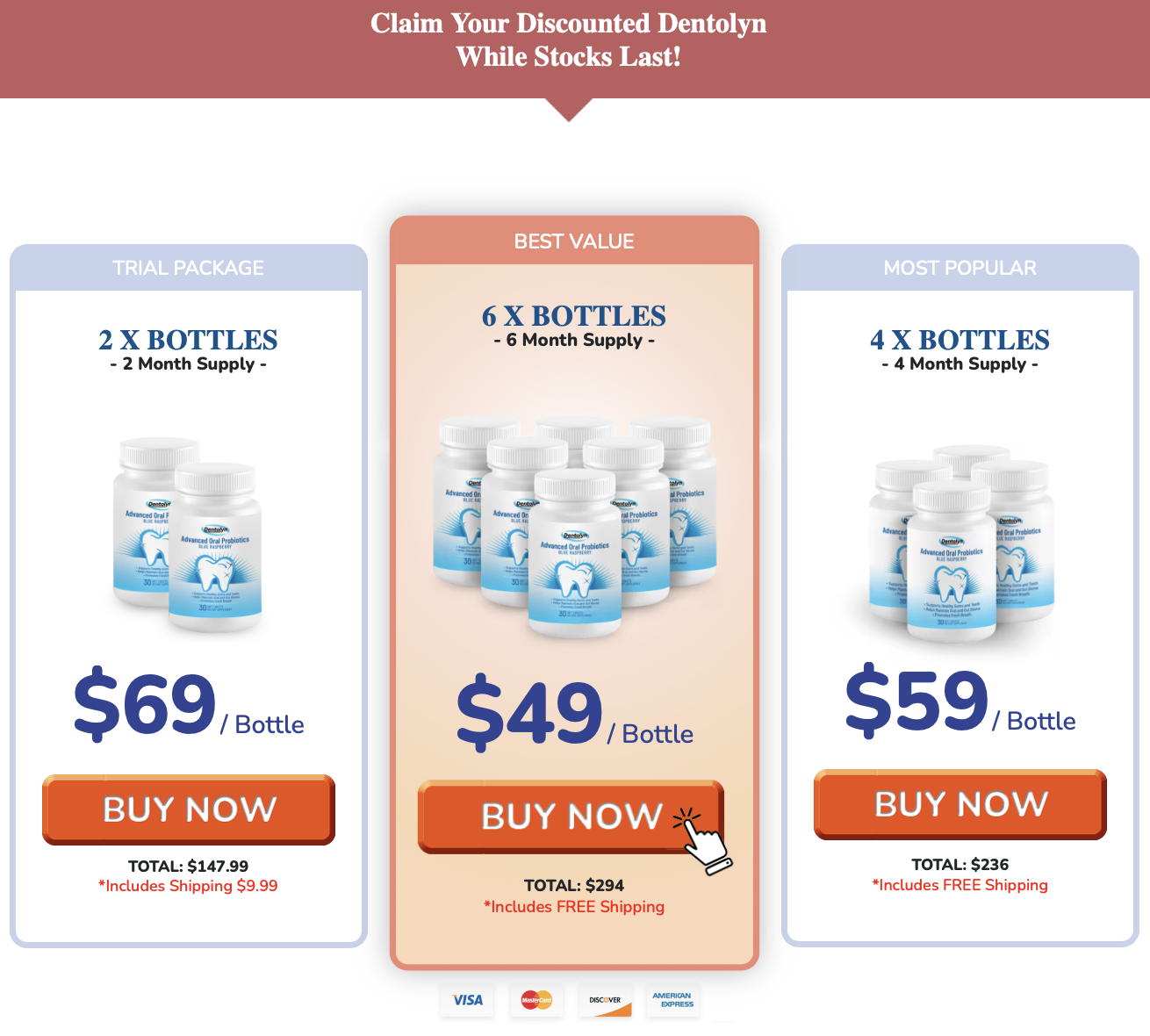
Compare the Current Dentolyn Packages
After deciding whether Dentolyn belongs in your routine, compare bottle count, total cost, per-bottle price, shipping and guarantee.
Frequently Asked Questions
What should a basic oral-health routine include?
Brushing, interdental cleaning, diet awareness, hydration and appropriate dental care form the foundation.
Can Dentolyn replace brushing or flossing?
No. Dentolyn should only be considered as an optional complementary supplement.
How important is daily consistency?
Daily consistency is central because plaque and oral exposures accumulate repeatedly over time.
Does Dentolyn contain xylitol?
The current reviewed formula lists xylitol.
When should oral symptoms be professionally checked?
Persistent pain, bleeding, swelling, loose teeth, lesions or other concerning symptoms warrant appropriate assessment.
Where can I compare current Dentolyn packages?
Use the dedicated Dentolyn packages page for current commercial details.
References
Rajasekaran JJ, Krishnamurthy HK, Bosco J, et al. Oral Microbiome: A Review of Its Impact on Oral and Systemic Health. Microorganisms. 2024;12:1797.
A Good Routine Has a Clear Sequence
Oral care becomes easier to maintain when the order of decisions is stable. First, protect the basics: brushing, interdental cleaning and appropriate dental care. Second, reduce avoidable pressures such as frequent sugar exposure, smoking and inadequate hydration. Third, monitor recurring symptoms. Only after these steps should an optional supplement be evaluated for convenience, formula fit and evidence.
Why More Products Can Make a Routine Worse
Complexity can reduce adherence. A routine that requires many poorly understood products may be followed less consistently than a simpler one built around a few high-value habits. This is especially relevant in affiliate content, where commercial products can easily appear more important than the behaviors that actually do the mechanical work of oral hygiene.
Build Around Repeatable Triggers
Daily habits are easier to sustain when attached to predictable events such as waking, meals and bedtime. The exact timing of Dentolyn should still follow the current verified label, but the broader routine can use these daily anchors to keep brushing, interdental cleaning, hydration and symptom awareness consistent.
How to Know Whether the Routine Is Working
Routine success should be judged by practical indicators rather than by how many products are used. Consider whether plaque accumulation is controlled, gums are comfortable, breath concerns are improving, sensitivity is stable and professional dental feedback is satisfactory. Persistent or worsening symptoms are a reason to investigate, not simply to add another supplement.
When to Change the Routine
A routine may need adjustment after new dental treatment, a medication change, persistent dry mouth, dietary changes, a new health condition or professional advice. Changes should be deliberate and limited enough to understand what is helping. Constant product switching makes it harder to evaluate whether the underlying routine is actually effective.
Where Dentolyn Fits Without Distorting the Priorities
If Dentolyn is used, it should occupy the optional layer of the routine. Its presence should not change the priority given to plaque control, regular cleaning or professional assessment. The decision is strongest when the buyer understands exactly what the product adds and what it cannot replace.
Consistency Usually Beats Complexity
A routine should be simple enough to repeat even on busy days. If adding Dentolyn makes the routine confusing, causes established hygiene steps to be skipped, or creates unrealistic expectations, the structure needs to be simplified. The useful test is whether every step has a clear role, can be followed consistently, and does not compete with brushing, interdental cleaning, hydration, diet awareness or appropriate dental care.
A routine is more durable when each step is easy to understand, easy to repeat, and clearly connected to a specific oral-care goal.
Ready to Compare Dentolyn Within a Better Daily Routine?
Put the fundamentals first, review the formula and evidence, then compare the current offer.